

Why Natural Ventilation Is the Future of Greenhouse Climate Control
Over the past decades greenhouse horticulture has evolved into one of the most technologically advanced forms of agriculture. Climate computers, LED lighting systems, precision irrigation, automation and data analytics now allow growers to control plant production with remarkable accuracy.
Yet many greenhouse consultants and experienced growers are rediscovering something fundamental: greenhouse climate performance often begins with airflow.
Ventilation plays a crucial role in controlling temperature, humidity and plant health. In many cases, the most effective climate strategy is not simply adding more technology, but designing greenhouse structures that allow natural air movement.
Across the world a growing number of growers, investors and horticultural consultants are reconsidering how greenhouse ventilation should be integrated into future greenhouse design.
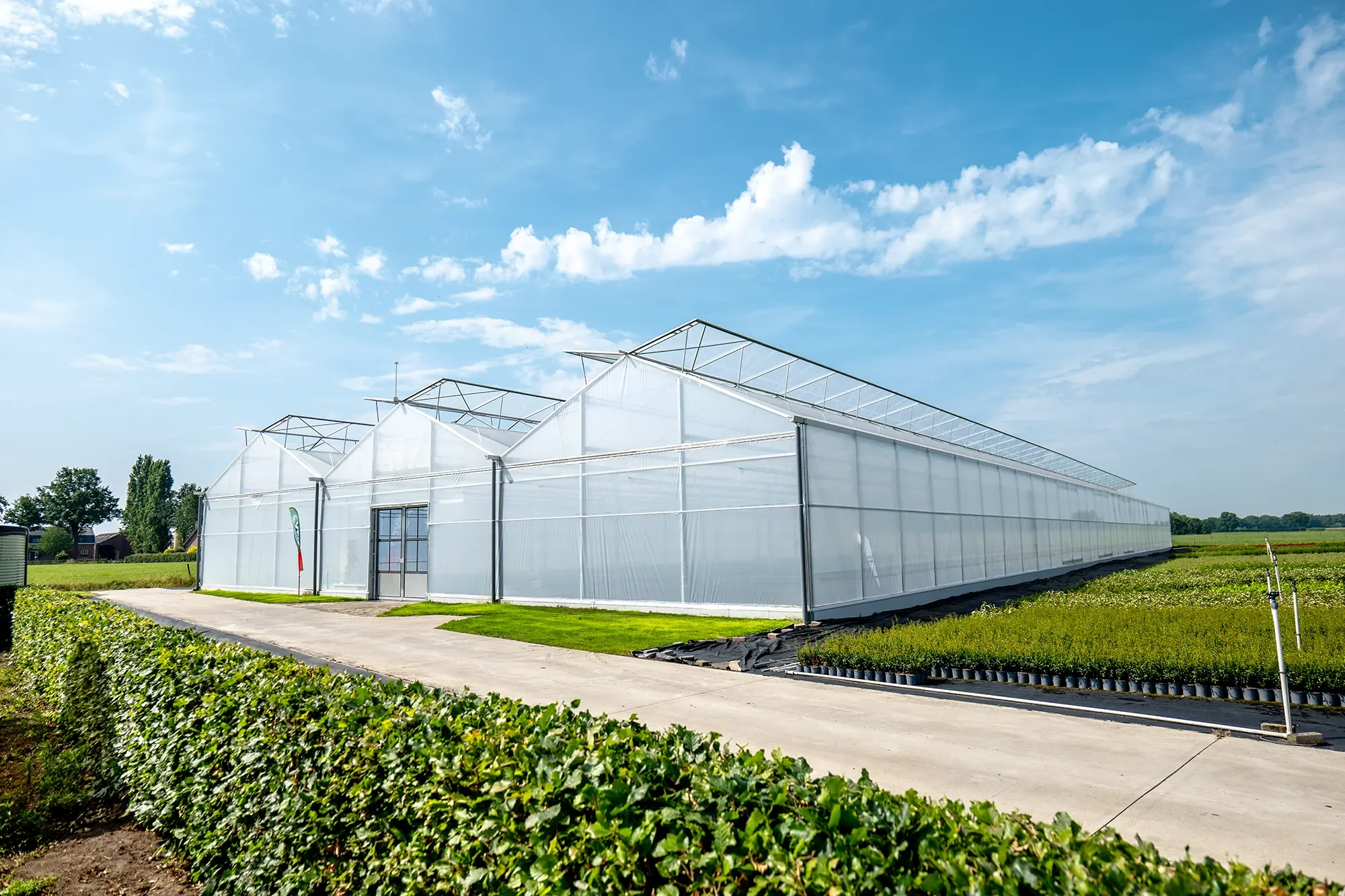
HortiHouse with continues large double ventilation windows.
The Science Behind Greenhouse Ventilation
Greenhouse climate research has repeatedly shown that ventilation directly affects temperature distribution, humidity levels and CO₂ exchange. When warm air accumulates under the greenhouse roof, temperatures around the crop can increase rapidly.
Opening ventilation areas allows warm air to escape while cooler air replaces it.
Research published by the International Society for Horticultural Science highlights that greenhouse ventilation significantly influences plant transpiration and disease pressure. Proper airflow refreshes the boundary layer around leaves and improves gas exchange.
This improves several important plant processes:
transpiration efficiency
CO₂ availability for photosynthesis
evaporation around the leaf surface
Without sufficient airflow humidity may accumulate around the crop, increasing the risk of fungal diseases such as Botrytis and powdery mildew. Ventilation therefore influences not only greenhouse temperature but also plant physiology.
Natural Ventilation Versus Mechanical Cooling
In warm climates greenhouse cooling is often achieved through mechanical systems such as fan and pad installations.
These systems force air through wet cooling pads to reduce temperature. While effective, they also require significant electricity and water consumption.
As energy costs increase worldwide, growers are increasingly evaluating alternative climate strategies.
Highly ventilated greenhouse structures provide a different approach. Instead of relying solely on mechanical cooling, these structures allow warm air to escape naturally while wind driven airflow refreshes the greenhouse environment.
In combination with fog systems, shade screens and energy screens this approach can significantly reduce operational costs.
Many growers find that natural ventilation can maintain acceptable greenhouse temperatures for large parts of the year without heavy mechanical cooling.
Why Ventilation Improves Plant Quality
One of the most underestimated benefits of ventilation is plant strength. Plants grown in highly controlled environments may develop softer tissues because they experience very little mechanical stress.
In contrast, plants exposed to moderate airflow often develop stronger stems and more compact growth. Air movement stimulates mechanical stress within plant tissues, encouraging thicker cell walls and stronger structural growth.
This principle is particularly important during the hardening phase of ornamental plant production.
Hardening Plants Before Shipping
In ornamental horticulture plants are often produced under stable propagation conditions before entering a hardening phase. During this stage growers gradually expose crops to more dynamic environmental conditions such as airflow, temperature fluctuations and increased light intensity. These changes stimulate stronger plant structures and improve plant resilience during transport and retail display.
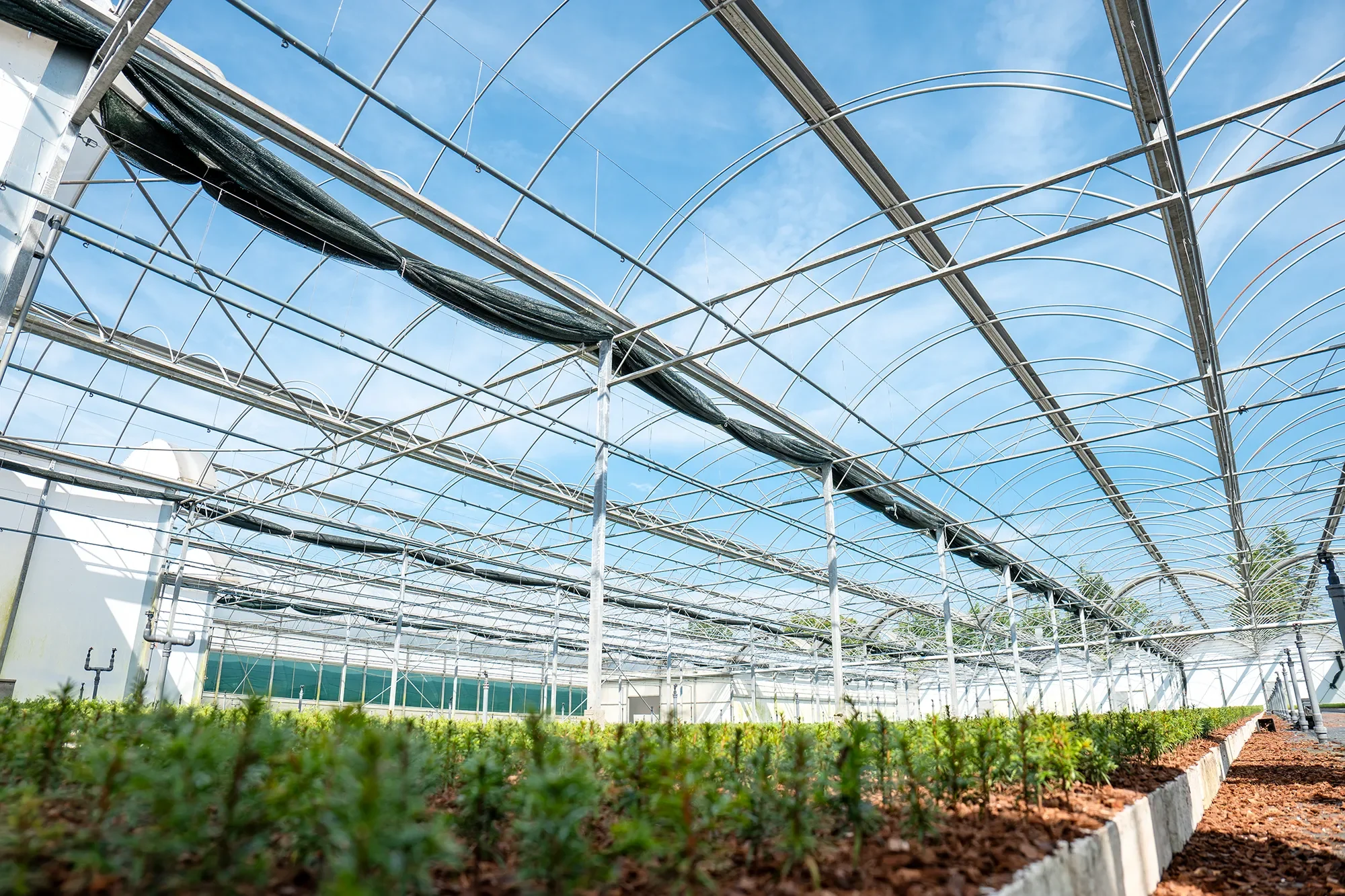
Bob van Wingerden of Catoctin Mountain Growers describes the experience this way: “Plants grown in a well ventilated environment simply become tougher. They adapt better to outside conditions once they leave the greenhouse.”
For bedding plants, perennials and young plants this difference can significantly influence shelf life and performance at garden centers.
Ventilation in Soft Fruit Production
Ventilation also plays an important role in soft fruit production. Strawberries, raspberries and blueberries are particularly sensitive to humidity accumulation around the crop. High humidity levels can increase disease pressure from pathogens such as Botrytis. Good airflow improves evaporation and helps keep plant surfaces dry. This reduces disease pressure and improves fruit quality.
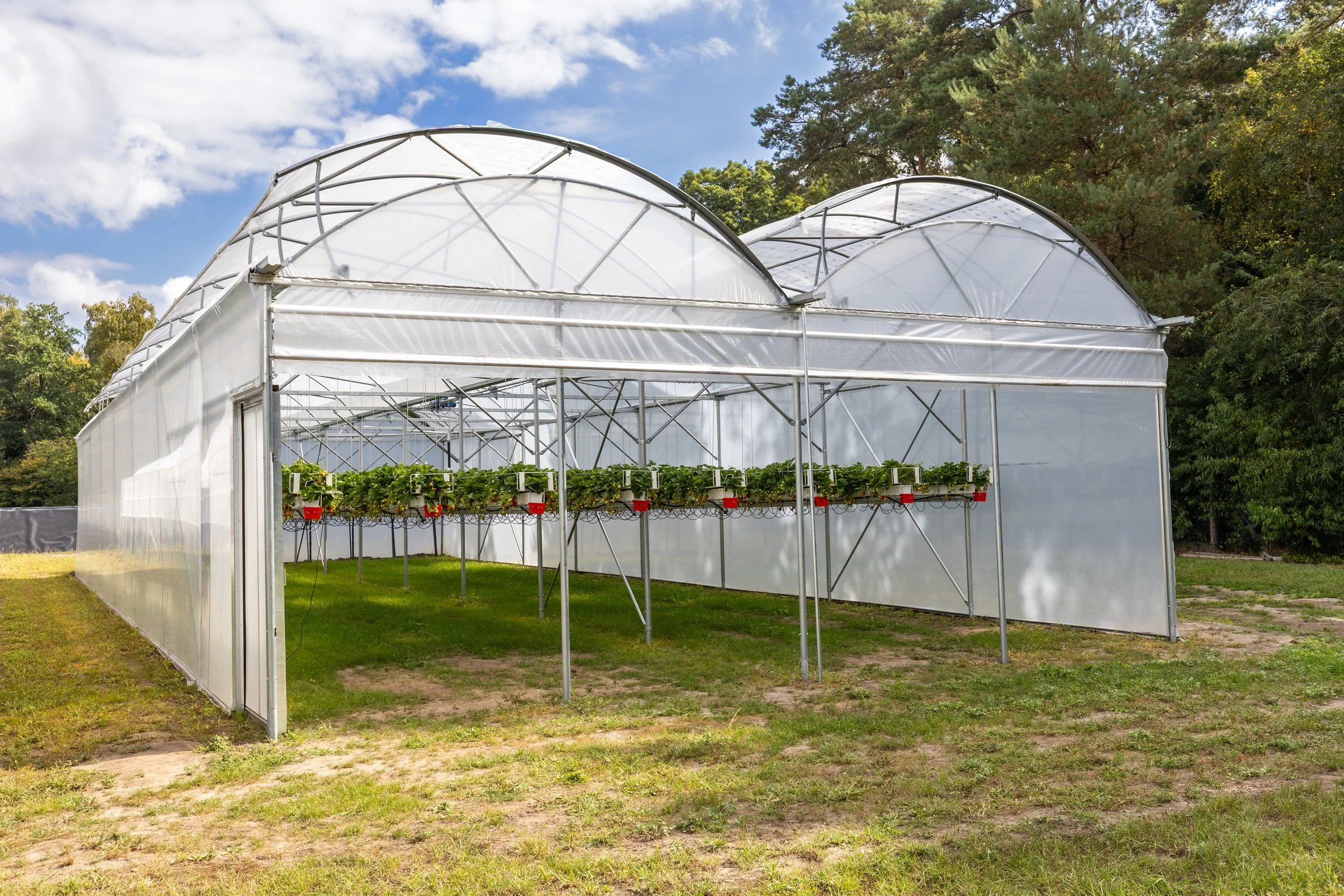
Rovero AirVent with a roof that opens up and self ventilating poly in the ridge, creating chimney effect.
Ventilated greenhouse concepts therefore offer an interesting solution for growers producing berries under protection.
Economic Considerations
Greenhouse investment decisions are always influenced by economic considerations. High tech glass greenhouses provide excellent climate control but require very high capital investment. For crops with lower margins, growers often evaluate alternative greenhouse concepts that offer a balance between investment cost and climate performance. Ventilated greenhouse structures with flexible climate control can provide such a balance.
Future Greenhouse Design
As greenhouse horticulture expands into new regions around the world several factors will shape future greenhouse design:
Rising energy costs
Water scarcity
Climate variability
Investment efficiency
These factors encourage greenhouse designers to combine technology with natural climate processes. Ventilation therefore becomes not just a climate parameter but a central design principle.
Conclusion
The future greenhouse will likely combine several elements:
strong ventilation, flexible climate control, efficient energy use and crop specific design.
Every greenhouse project is unique. Crop type, climate conditions, local infrastructure and market requirements all influence the optimal greenhouse design.
At Rovero we enjoy thinking along with growers and investors to find the best custom greenhouse solution for their specific situation.
Growers who would like to exchange ideas about greenhouse design or climate strategies are welcome to contact our team. You can reach the Rovero team via Sales@rovero.com to schedule a Teams call or brainstorming session.